Who is following up that client? If nobody knows, you need a CRM.
Customers scattered across WhatsApp, the spreadsheet, email and a notebook, and nobody knows who is following up each case. What a CRM is, explained without jargon, the signs that you need one and when it is still too early.
The momentAn ordinary Tuesday, four different places
Tuesday morning. A customer wrote on WhatsApp on Friday asking for a quote. Another left their details in the website form and the notification landed in the inbox. A third phoned, and someone jotted the number down in the notebook by the till. And the customer spreadsheet, the one that was going to be updated “when there is a moment”, has not been touched for three weeks.
At the team meeting nobody can answer the basics: who got a reply? Who is following up each case? Who were we supposed to call today? Everyone remembers their own part, and whatever nobody remembers simply gets lost.
Two weeks later, Friday’s customer signs up with someone else. There was no serious mistake. It is just that nobody wrote back to her.
The problemYour customers live in each person’s memory
As a business grows, customers arrive through more places: WhatsApp, the website, email, the phone, a recommendation. Each channel keeps a piece of the story, but none has all of it. What ties it together (who that person is, what they asked for, where things stand and what needs doing next) stays in the head of whoever dealt with them. While that person is around, it more or less works. When they are on holiday or snowed under, cases stand still. And a customer left waiting without news goes cold: they do not complain, they just leave.
Often a customer is not lost over price. They are lost because nobody wrote back.
What a CRM isOne board with all your customers
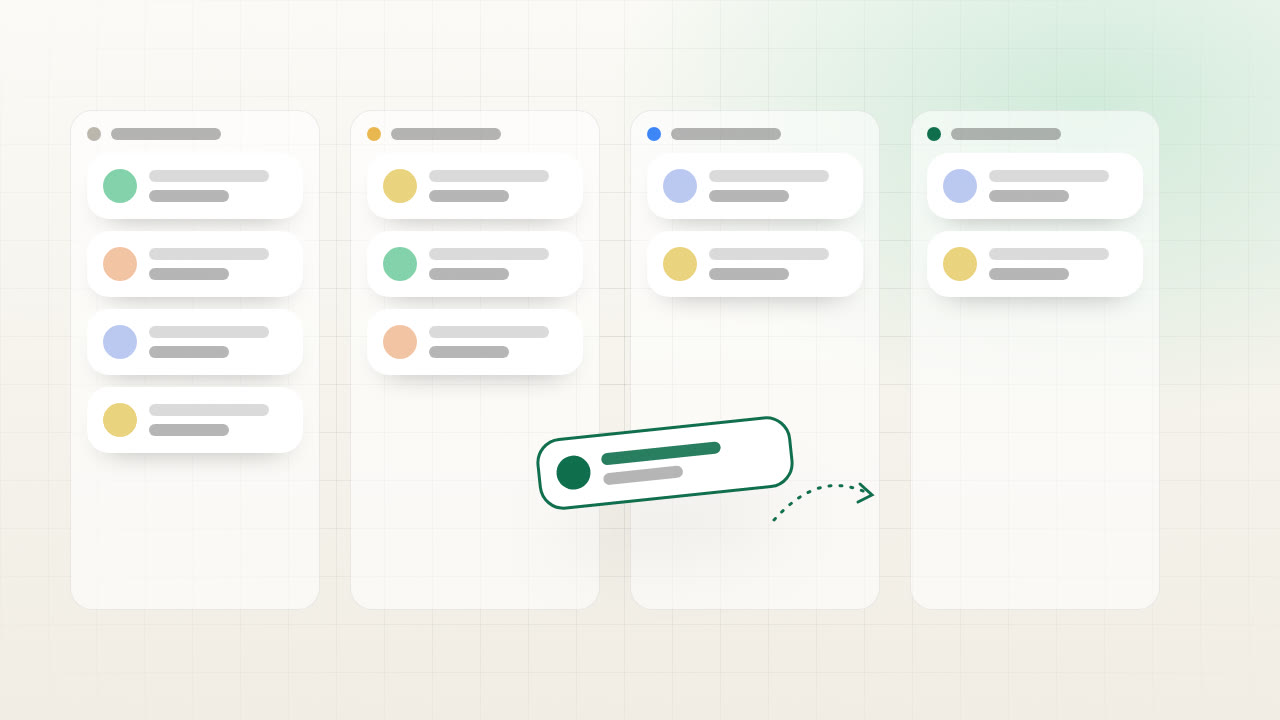
CRM stands for “customer relationship management”. In plain words: it is a board where you see all your customers and opportunities in one place, organised by stage. Each card is a person or a company, and each column is a moment: they have just got in touch, we have sent a quote, they are deciding, they are now a customer.
That is enough to answer the three questions from Tuesday’s meeting. And you do not need software to start thinking this way: even if you use a spreadsheet today, adding “owner” and “next step” columns already makes a big difference.
How we do itInnectia X, Innectia’s CRM
In Innectia X, everything comes in on its own: people who fill in your website forms, those who take the free website check and meetings booked in the calendar all appear on the board without anyone copying anything. Each opportunity moves through stages and has someone in charge, so at a glance you know what is pending and who is following it up.
It also includes an AI chatbot trained on your company’s documents, and you choose where it works: answering on WhatsApp whoever writes to you (it offers available times and answers questions, but does not confirm bookings or take payments, and hands the conversation to a person when needed) or as an internal assistant, for your team only. What Innectia X does not do is send mass messages or campaigns: that is spam.